The huts had steps

Auschwitz is a place synonymous with evil and the worst of humanity. Rightly it is a focus of reminding us of the evils of antisemitism, as well as the Nazi persecution of Roma and Sinti people, political dissenters and LGBT+ folk. Dehumanisation of people in this camp of death was key to how the whole system worked. For most of the population of Germany during WW2, Auschwitz-Birkenau and other camps were out of sight, out of mind. What mattered under Nazi culture was the removal from society of people who didn’t fit within a narrow vision of who belonged in the 1000 Year Reich. Those who did not belong were cast as less than human, a pestilence to be eradicated. Industrial, systematic factories of death, such as Auschwitz-Birkenau were the result.

I am a Gen X Brit who grew up only a scant few decades after WW2, and Auschwitz and its horrors were certainly part of the tale of recent history which I grew up with. As a student of German O and A levels, it certainly came up through class discussions around some of the literature we studied, and the focus was very much on the Jewish holocaust. That aspect remains ingrained in me, alongside a strong instinct towards antisemitism, though I have become more aware of the wider picture of genocides and the many other ways humans dehumanize and oppress other humans in the years since.
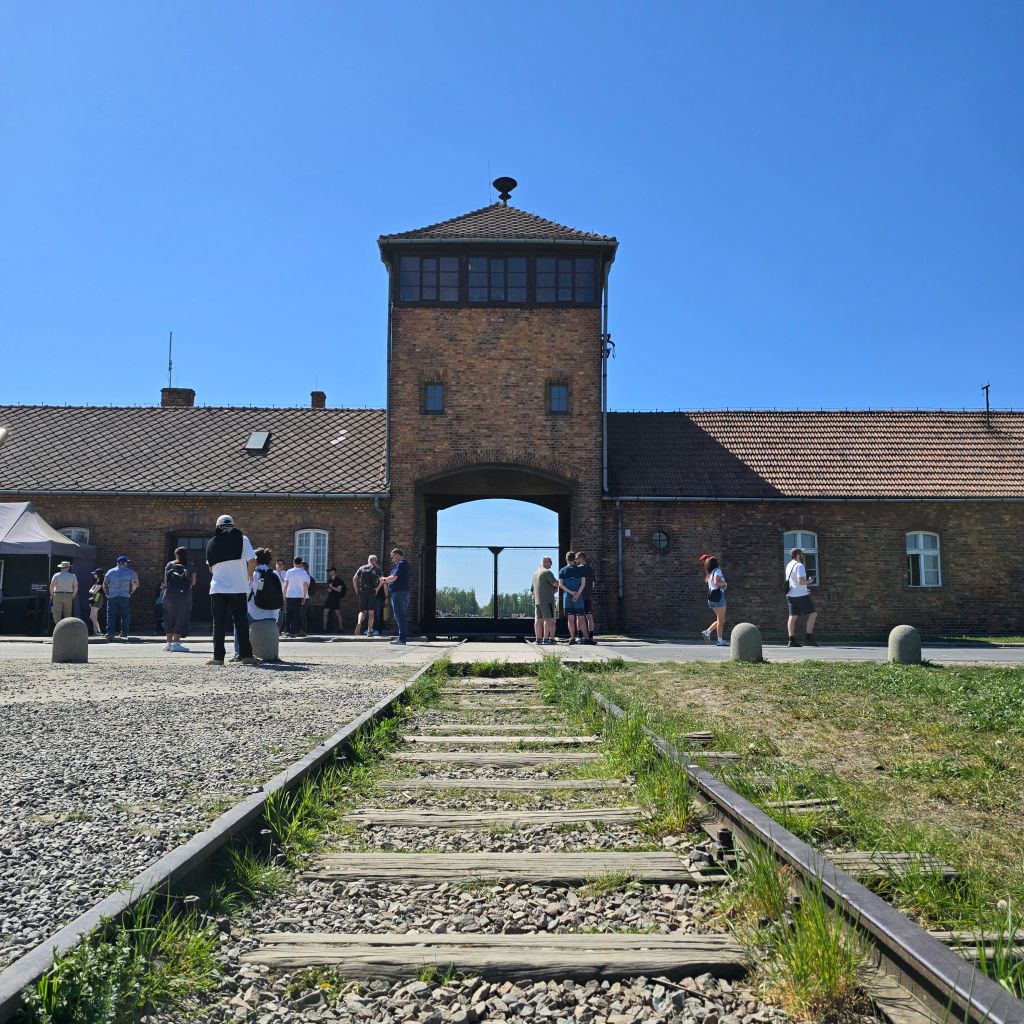
The entrance to Auschwitz-Birkenau.
Photo credit: Nick Morgan, 3rd May 2026

So having just visited the site for the first time, one aspect struck me: the huts at Auschwitz-Birkenau had steps. This probably sounds insignificant amid many, more obvious, horrors there. But yes: those steps were what stayed with me, because nobody with a disability or even the slightest sniff of physical impairment even made it as far as those huts. 

As soon as anyone disabled got off the train, they were sent, not to the huts in the labour camp, but to the gas chambers and crematorium. Among the disabled arriving on the trains were veterans of the Great War, those who lost limbs or were left with life-changing injuries. Despite their service in the armed forces of their nation, they had no place in the vision of the new, Nazi nation. They were murdered alongside all the others who were ‘less than’.  In the museum there is a room full of prosthetic limbs, back supports, walking aids, trusses, adapted footwear and other assistive items stripped from disabled arrivals before their murder. It is a huge pile of items, and even this represents only a fraction of the horror: these items were merely what was found onsite at the end of the war.

The process of dehumanization was not extended to embrace disabled people: it was there right from the start of the Nazi project, way before Auschwitz was built, and indeed the denigration of disabled people is often one of the early indicators of a society going down a dark, evil and oppressive path. This was certainly the case with the Nazis. From the early 1930s, the regime frequently described disabled people as “useless eaters”, framing them as a drain on the taxes of non-disabled people in a time of economic strain. Depressingly similar attitudes and language is used in the UK these days around the issue of social security for disabled people, where further punitive restrictions and demeaning and exhausting processes are often announced by governments keen to reassure the able-bodied that their taxes are not being wasted on less economically-viable people. This is framed as preventing fraud, but the outcome is a culture in which all disabled people are made to feel they constantly have to justify themselves and prove they are deserving of even the slightest accommodation or adjustment which enables their participation in society.

The Nazis took this much further and much more quickly, but that is not to say it could not happen here. Having used a national poster campaign in the early 1930s to encourage people only to have children who were likely to be good, healthy stock (framing it as a patriotic duty to avoid having children if there were any hereditary conditions in either bloodline), the Nazis brought forward a ‘Law for the Prevention of Offspring with Hereditary Diseases’, which made the sterilisation of disabled people compulsory. This was met with depressingly little opposition when it was enacted in 1933 as the cultural dehumanisation had softened society up very effectively.  The evil of the Jewish holocaust at industrial levels only fully came into effect at Auschwitz-Birkenau around a decade later, but the evil mindset which made this genocide possible began with the attack on disabled people as the cheapest and easiest win.

Vigilance is needed in our own age about any attempts to diminish, marginalize and dehumanize any groups of people on any grounds, whether race, gender, religion, sexuality, appearance, ability, impairment, capability, intellectual beliefs or disability.  Disability is part of the diversity of human life and always has been. We need not look to paralympians or idealized, sentimentalized or heroic disabled individuals to justify the place of disabled people in our society. We are each of us capable of becoming disabled ourselves in an instant, as the result of an accident, or as our bodies unexpectedly turn on us with hidden conditions, or even just as a side effect of getting older. A core belief of Christians is that we are all made in the image of God, and that everyone is precious in God’s sight. Disability is not an aberration which excludes us from the Divine, or diminishes our worth or worthiness. When Jesus ascended into heaven, his resurrected body still bore the disabling wounds of the cross: his pierced hands, feet and side; the marks of the flogging and crown of thorns. It is not only the physically unwounded and unimpaired who are welcome to follow Christ into the perfection and glory of heaven.

Christians need to get ahead of this slippery slope by reframing our theology around disability (which needs a whole, separate blog post with links to disabled theologians!) and auditing not only our church buildings for accessibility, but the way we organise our services, events, communications and procedures. One of my churches undertook an accessibility audit and discovered (simply by asking people about things which made it harder for them to participate in services and the wider life of the church) how much we were unwittingly excluding people and preventing them flourishing. By addressing these barriers, we began to embed a theology of the equal value and vocation of everyone. But this was only a first step. We needed to change our mindset on inclusion, so that people with a lived experience of disability were around the table as leaders, not just as consultees, reflecting our equality as children of God and challenging our assumptions about calling and vocation.

We also need to amplify the voices of disabled theologians and actively listen to disabled Christians, trusting them to shape our understanding and inform our actions and activism in the fields of inclusion and disability rights.

The alternative to getting our collective acts together is an unequal vision of human worth, a blasphemy against the image of God within each of us. That easily becomes a vision which leads to our complicity in darkening political paths: roads and tracks which can end with the mundane yet evil reality of steps into huts.
On earth as it is in heaven?

Pentecost 2026

On the day of Pentecost, something extraordinary happened. The Holy Spirit fell on a room full of frightened, uncertain people, and suddenly they found themselves speaking in languages they had never learned. And the crowds outside were astonished, not because everyone was saying the same thing in the same way, but because each person heard the good news in their own language, the voice and cadence of home.

The Holy Spirit honoured every language, every people, every place of origin. Parthians and Medes, people from Mesopotamia and Cappadocia, visitors from Rome and from North Africa, all hearing the same message, each voiced in a way which was familiar to them. Difference and diversity was not the problem. Diversity was inherent in how the Spirit chose to speak.

So this is where the Church begins: not with uniformity, but with a Spirit-filled community that holds together people of every nation and background.  And then, watch what happens next: as the weeks and months unfold in the early chapters of Acts, we see what that Pentecost community becomes in practice.  St Luke gives us two pictures of this, in chapters two and four of Acts.  All the believers were together and held everything in common. They sold property and possessions to give to anyone who had need. They broke bread in each other’s homes and ate together with glad and sincere hearts. There were no needy people among them, because those who owned land or houses sold them and brought the proceeds to the apostles, to be distributed to anyone who had need.

This is a community defined by how it loves and shares, not by who it excludes.  It crossed every social boundary of the ancient world. Wealthy landowners and day labourers; Jewish believers and Greek converts; men and women; the respectable and the marginalised, all held together by a common life rooted in the love of Christ.  And everyone notices!  Luke tells us they enjoyed the favour of all the people.  There was something visible, something distinctive about this community: you could see, from the outside, that something different was going on here. People were being cared for and nobody was being left behind.  The vulnerable, the widow, the orphan, the stranger, they all had a place at the table.  This is what the Holy Spirit produces.  Not just a warm feeling when they gather in worship or prayer, but a whole new way of living together.

Now, I want to make a connection that might surprise you, and I want to make it carefully lest I be misunderstood.  It involves a loaded and often divisive word: nationalism.  The Christian community we see emerging from Pentecost in the Book of Acts is a picture of what human society, at its best, is meant to look like.  And when we talk about nations, about what a nation is for and what holds it together and defines it, the Acts vision has something urgent and important to say in answer to the growing tide of nationalism around the world, including in our own country.

We have watched versions of nationalism grow, versions that are built on fear, on grievance, on the idea that our nation can only thrive if we define ourselves against someone else, the immigrant, the outsider, the other.  We have seen nationalism weaponised by politicians and influencers who wrap themselves in religious imagery while pursuing agendas of exclusion and division.  That version of nationalism is rightly challenged by followers of Christ as it is entirely at odds with the ministry of Jesus and the Holy Spirit-inspired Pentecost community of inclusion, empowerment and love which we celebrate today.

But this is not the only vision of nationhood and nationalism available.  If by nationalism we mean a way of defining what makes us cohesive as a nation, what our shared values and vision are, what both the breadth and the limits of our sense of nationhood are, Christians have, in the post-Pentecost community of believers, a wonderful model to draw upon.  And we, the Church, as people inspired by that same Spirit, absolutely must stand up for that vision in times like these.

Earlier this year, the former Bishop of Leeds, Nick Baines, published a substantial and thoughtful report called Reimagining Europe.  It is a serious piece of work, and I commend it to you.  In it, Bishop Nick makes a careful argument that nationalism, properly understood, is not inherently destructive. He points out that civic nationalism, a shared sense of belonging rooted in common values, mutual obligation, and the rule of law, has provided the foundation for democracy, for the welfare state, for public education, for all the institutions that exist to serve the common good rather than the powerful few. This is a nationalism which gives a sense of belonging, interdependence and shared values; a national identity which makes for a stable, safe society in which all may flourish within a clear legal and constitutional framework.  The problem, he argues, is not nationalism itself, but the ethnic, exclusionary version of nationalism which hijacks the language of national identity for its own narrow purposes.

Bishop Nick goes further.  He says that Christians are particularly well placed to offer a different vision because the Church, at its best, is already a community that holds together people of every background in a common life shaped by shared values.  Church communities practise, however imperfectly, what a genuinely inclusive community looks like.  And we have something transformative to say about how nations could similarly thrive if we draw upon the vision of the early Church in Acts as a model of communal living and interdependence.

That argument feels urgent right now. We are living in a time when the settlement that has kept Europe largely at peace for eighty years is under serious strain. The war in Ukraine is not just a distant tragedy. It is a stark reminder of what happens when one nation decides that another has no right to exist, no right to its own identity, its own language, its own place in the world. Thousands of people are dying because a neighbouring power refuses to honour the particular dignity of a particular nation. And across Europe more broadly, we are watching the slow erosion of the values that have underpinned our common life since 1945. The rule of law, the rights of minorities, the independence of courts and press, the right to trial by jury, the willingness to pool some sovereignty for the common good of all, the concept that telling the truth in public life matters.  These things are being quietly dismantled in some places, and loudly trashed in others, with no commitment to finding positive new structures, safeguards and shared moral vision to take the place of that hard-won scaffolding which sought peace, stability, mutual respect and flourishing.

This is the moment for Christians to speak, not with anger or with partisan political noise, but with the clear and grounded voice of people who know, from their own Scriptures and their own communal life, what genuine mutual flourishing looks like.

A nationalism worth the name is not about who we keep out. It is about what we hold in common. It is about the kind of society we are building together: whether the vulnerable are cared for, whether the stranger is welcomed, whether the rule of law applies equally to everyone, whether truth matters, whether the next generation inherits something worth having, whether our shared planet, its natural environment, climate and resources remain sustainable and liveable.

That is the Acts vision, scaled up. God’s people are called to be a holy nation, a model of what an earthly nation might also strive to become: a community of people, rooted in a particular place, shaped by particular values, committed to the common good of all who live among them. Not because they are all the same, but because they are all held within the same generous, costly, inclusive love. We know this as the love of Jesus. And we should seek to spread that love, not by conquest, but by being the pervasive and irresistible aroma of Christ in the world. We should love as lavishly as those first-generation Christians did so that everyone notices how we love one another, and how we model holy nationhood in our church communities. The fragrance of Jesus must fill the world around us as we live his risen life together in the power of the Holy Spirit.

Pentecost did not erase the nationhood of all those diverse people. The Holy Spirit redeemed their nationhood by revealing a new way of living communally. They received the Gospel in their own tongue and the Holy Spirit revealed to them what belonging to a people could look like when it is animated by something larger than fear or pride or grievance.

That is the vision we are called to embody in the common life of our church community, and in the way we speak into the public conversation of our times. May the Holy Spirit fall upon us, and equip us with the courage, and the clarity, to do so. Amen.

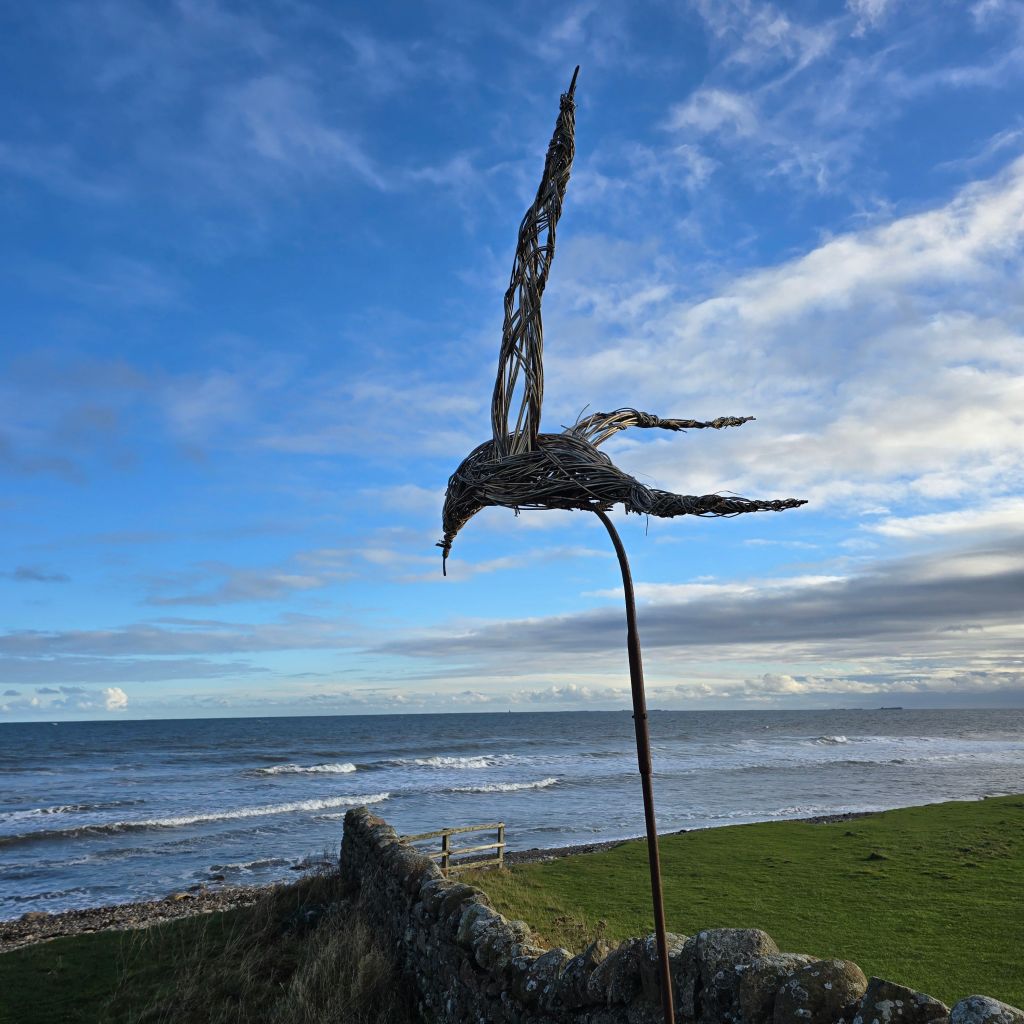
The Holy Spirit raised people’s eyes above their earthly nationhood to give them a fresh vision of society. (Sculpture on Holy Island, Northumbria – photo by Nick Morgan 2024)

St Peter’s Church Walton

A letter from the vicar to parishioners in the village of Walton, Wetherby

Dear Walton Resident,

St Peter’s Church has been part of our village skyline for at least 675 years. We want to continue to be part of our lovely village’s life for years to come, but we need your help.

St Peter’s is a Grade II* listed building which is expensive to maintain.  In addition to this, the overheads of heating, lighting, grounds maintenance, tuning the organ, and being served by clergy as part of the Diocese of York add to our overheads.  The Sunday congregation are a faithful few and already give generously of their money, time and talents to ensure that Sunday worship continues, that we are here to serve you all when needed, and that St Peter’s can play its part in the vibrancy of village life by putting on fundraising and community events and helping the village mark the changing seasons as we celebrate Christmas, Easter, Mothering Sunday, Harvest and national celebrations. But the congregation cannot keep things going alone, and we need more people to join our Planned Giving schemes, as well as make one-off donations to support St Peter’s.

Planned Giving enables us to budget and face the future with confidence so we can meet our financial obligations.  It is often incorrectly assumed that the Church of England is rich and local churches will simply keep going for ever. But the fact is that local churches like St Peter’s receive no central or national funding, and we literally rely on the generosity of parishioners and worshippers to keep going week by week.

As vicar of Walton, I love this village and am committed to continuing to serve you all. Whether you share my Christian Faith or not, if you like to be part of a village where there is an active church which clergy continue to serve, and which dearly wants to continue to be part of village life, please consider supporting St Peter’s in one of the ways detailed in the enclosed sheet if you are not doing so already.

Thank you for taking the time reading this letter. If we at St Peter’s can offer you or your loved ones any support, please do not hesitate to get in touch. The Parish Office number is 01937 844402 and our email address is bramhambenefice@outlook.com

Details of church services and other activities at St Peter’s and other churches in the Bramham Benefice may be found on our website www.bramhambenefice.org – the homepage includes our weekly Newsletter which has the most up to date information about services and events.

Yours faithfully,

The Reverend Nick Morgan, MA, Vicar of Walton


How to support St Peter’s Church

THE PARISH GIVING SCHEME

The Parish Giving Scheme allows you to set up regular giving, or to make one off payments. Visit their website www.parishgiving.org.uk and search for us there using your own postcode, then select St Peter’s, Walton,

or use the QR code (to the right).

or simply call 0333 002 1260 and a friendly operator will talk you through the process. Our Parish Giving Scheme reference number is 430643175 and our postcode is LS23 7DJ.


ANNUAL LUMP SUM DONATIONS

You might consider committing to give an annual lump sum to support St Peter’s, perhaps towards the end of each tax year, or when you receive annual dividends. If this is the case, please contact our treasurer Fiona Robinson fionarob@outlook.com to let her know how much you would like to pledge each year. This will help us budget and know we can meet our financial commitments and Fiona will tell you how to arrange these payments.


STANDING ORDERS?

If you already have a standing order to St Peter’s Church, please consider transferring your planned giving to the Parish Giving Scheme.  The benefits of this scheme are:

  • you have the Direct Debit guarantee to safeguard your payments
  • each year it gives the option of increasing your payments in line with inflation which helps future-proof our budgeting. This increase is never done automatically – only on your say so.

ONE-OFF GIFTS

If you would like to make a one-off gift to St Peter’s Church
please make cheques payable to: St Peter’s Church, Walton,

or make a Bank Transfer to: St Peters church Walton 55-81-11  03626237

or contact our Treasurer, Fiona Robinson – fionarob@outlook.com

St Peter’s Church, Walton, in the Diocese of York
Loving and serving the village of Walton since 1350AD and committed to keeping our heartbeat of love, regular prayer and worship going in our village into the future.

Magnificat: a call to justice and peace

Readings: Micah 5:2-5a and Luke 1:39-55

You are the light

When Archbishop Desmond Tutu died at Christmas 2021, we lost someone who truly shone the light of Christ into the world. I wrote a song, based on some of the words of Jesus from Matthew’s Gospel which are appropriate for Epiphany, and for remembering Archbishop Tutu, one of those people who really was a light on a hill.

Jesus said, “You are the light of the world. A city built on a hill cannot be hidden.  No one after lighting a lamp puts it under the bushel basket, but on the lampstand, and it gives light to all in the house.  In the same way, let your light shine before others, so that they may see your good works and give glory to your Father in heaven.”

Matthew 5:14-16
Recorded at St Mary’s Church, Boston Spa, Epiphany 2022

Stones at a Remove

Stones at a Remove

A standing stone,
Place of gathering,
Landmark on a hill.
A place seen from far off:
Somewhere to aim for.

Speaking of more than stone,
Being more than a beacon:
Emblem of companionship,
Presence of encouragement
On faith’s journey.

Articulating rootedness:
Community of ages,
Speaking of destination
Even to those
Not knowingly on that journey.

Icon of Light.
Sign of Christ.
Agent of the Holy Spirit.

Virtually visible
Yet literally present
Where utterance enters heart;
Where conversations continue;
Where God’s love and relationships bloom.

Witness to life in Christ,
Inviting a threshold-crossing
Into standing in the flesh
Among living stones
Who continue to build, be built and to bless.

A standing stone,
Place of gathering,
Landmark on a hill.
A place seen from far off:
Somewhere to encounter God.

written 6th June 2015, Upper Church, Community of the Resurrection, Mirfield

I wrote this poem for Sian Lawton as she took on my former role as Ripon Cathedral’s online ministry co-ordinator back in 2015, but here in 2021 it has fresh resonance with the post-lockdown importance of renewing our ministry in church buildings.

It is a reflection on the complementary nature of online and church building-based ministry and worship. The standing stone refers to the Anglo Saxon gathering stone in the churchyard at Ripon (near its southwest corner, and which looks like a spent match) – an ancient place to gather in worship, but a very different expression of gathered worship to even what went on in St Wilfrid’s 7th century church on this site. Places and forms of worship evolve.

Online church, and the church building have in the poem the same role, and are guided by the same Spirit.

Dust, recycled

I’ve been preparing the ashes for Ash Wednesday this afternoon. It’s quite an interesting process (at least, The Dog™ thought so as he supervised).

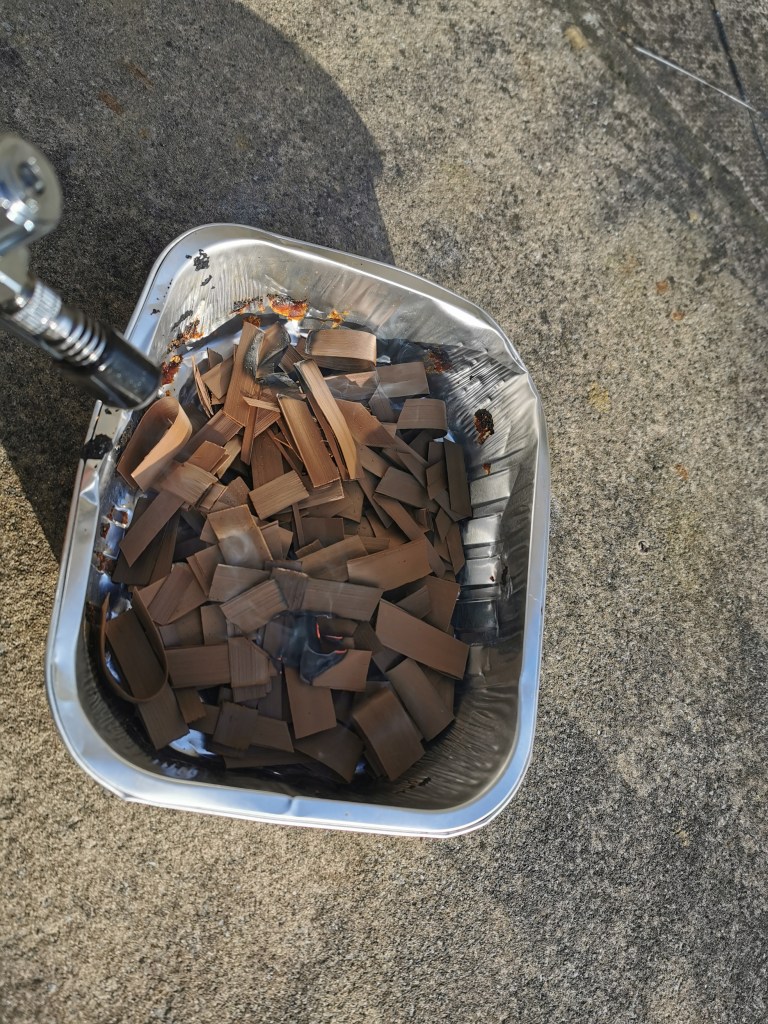
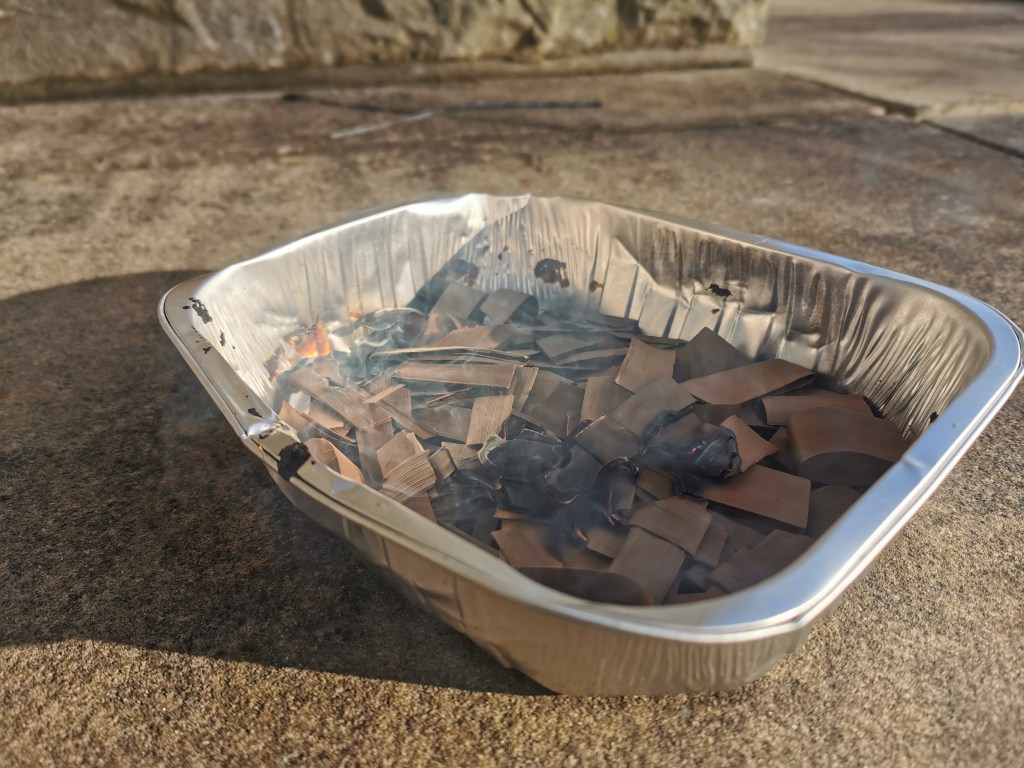
How to prepare ashes for Ash Wednesday…

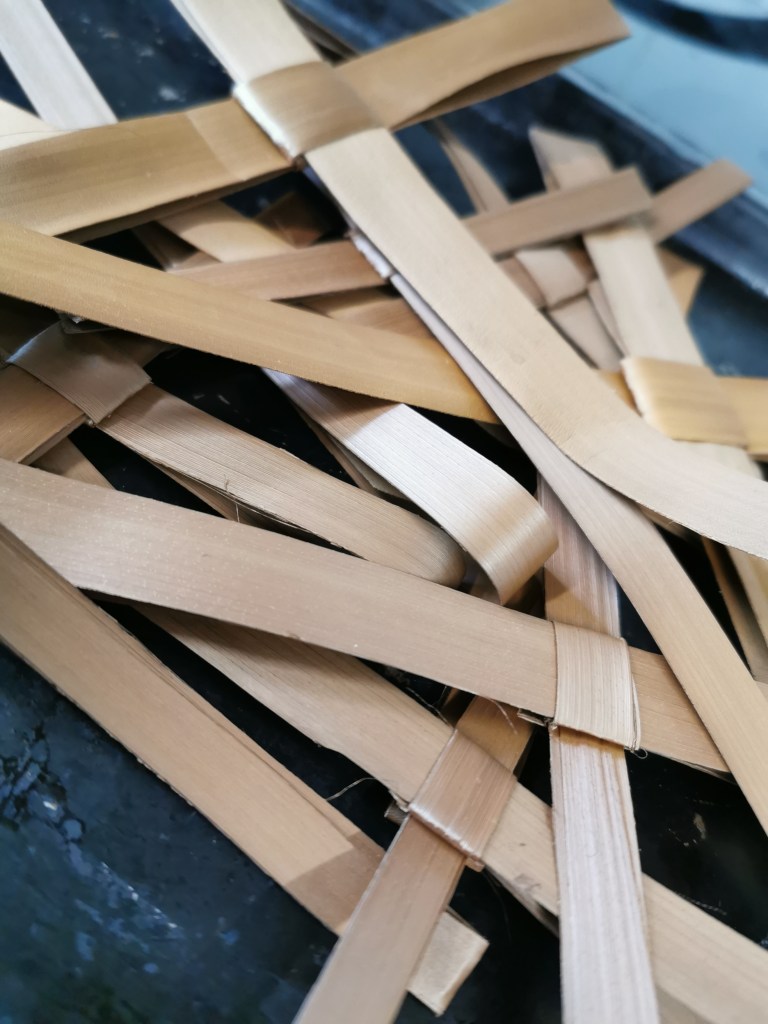
  1. Collect in the palm crosses from last year from folk at church.
  2. Bake them (the crosses, not the folk at church) at 220 degrees centigrade for half an hour or so. This burns off the oils in the leaves so that they will burn to ashes when you start getting serious about burning them in step 3.
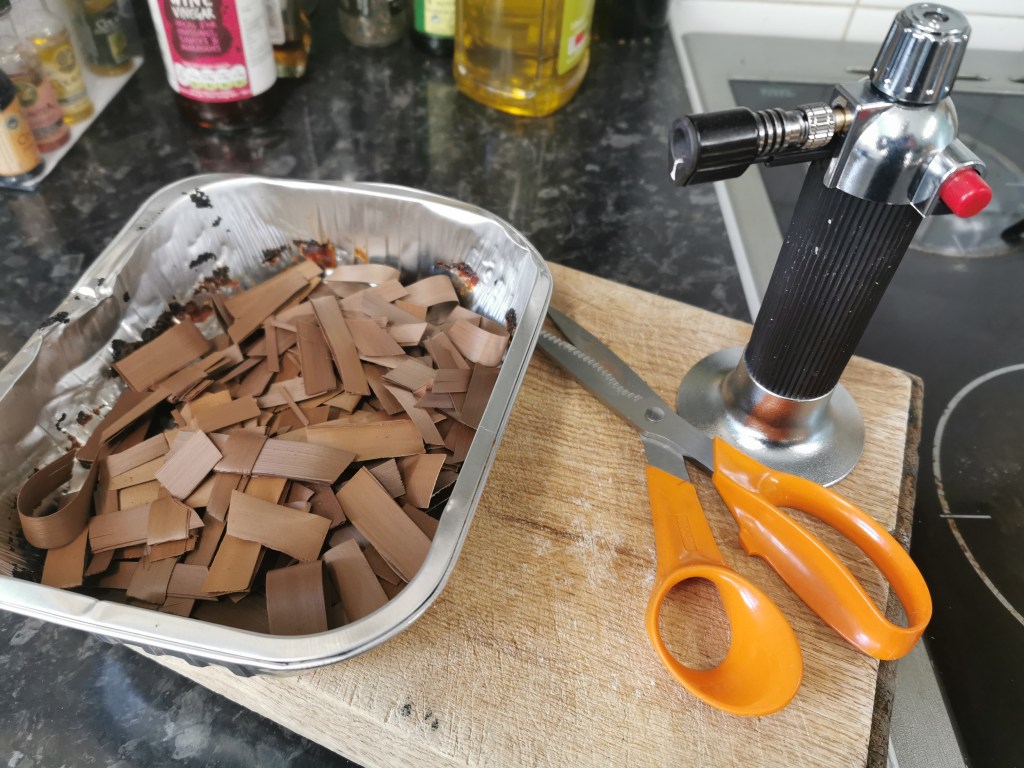
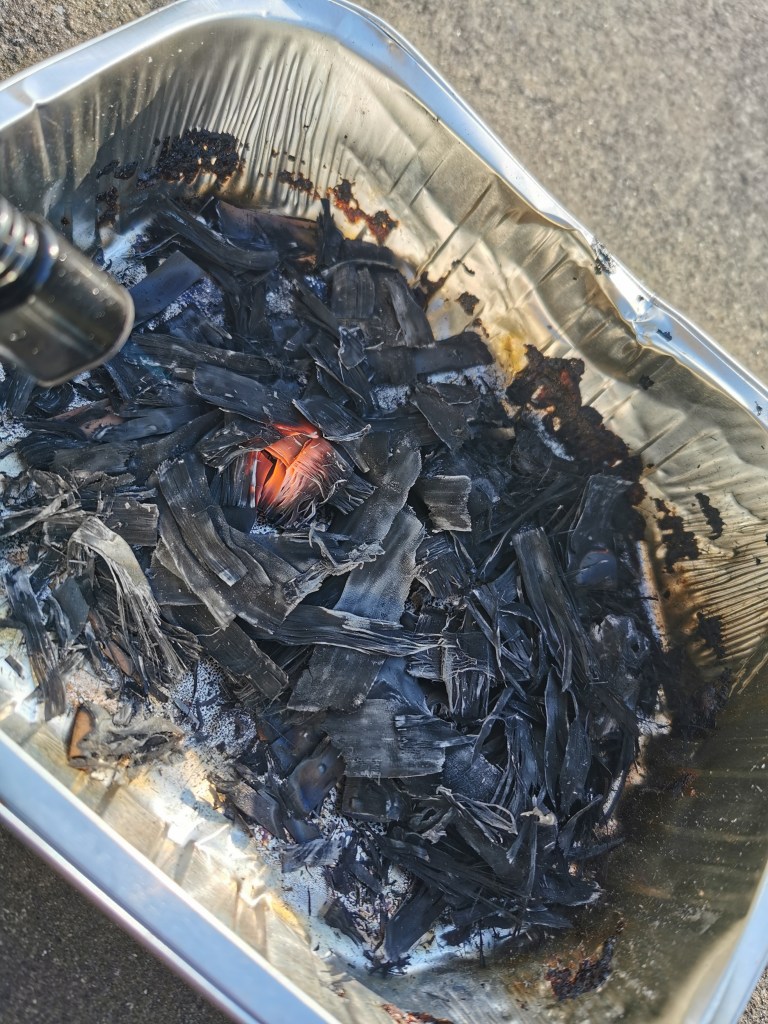
  3. Get serious about burning the palm crosses. In my case, this involved snipping them up, putting them in a foil tray out of the recycling, then setting about them with a kitchen blowtorch outside.
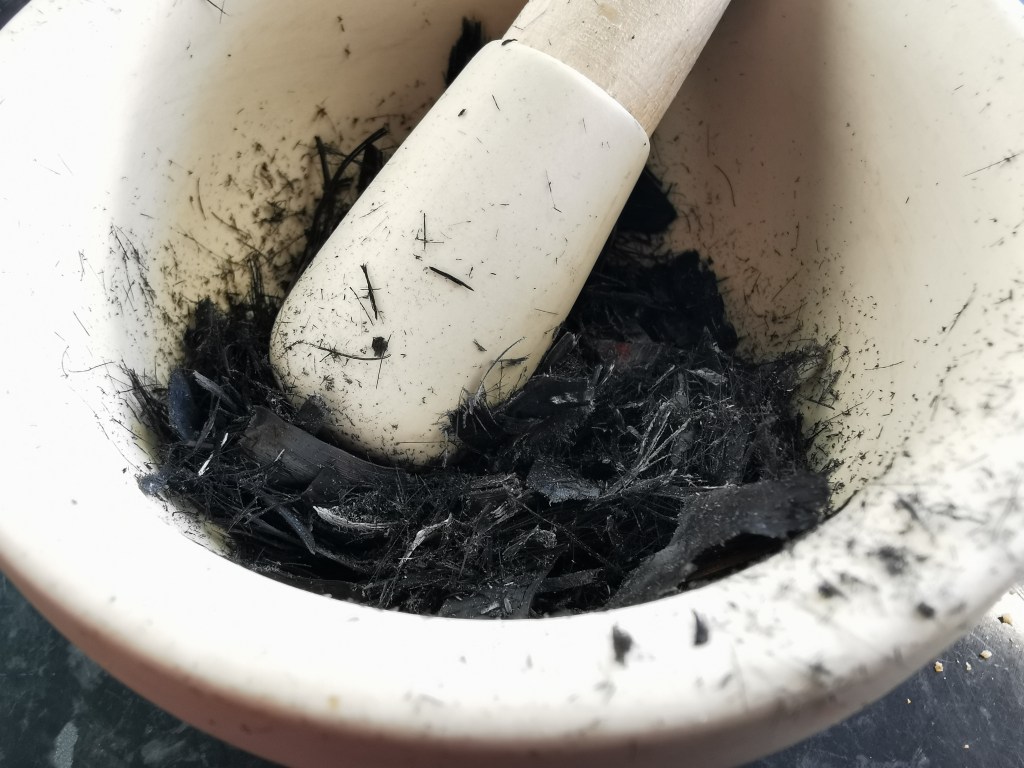
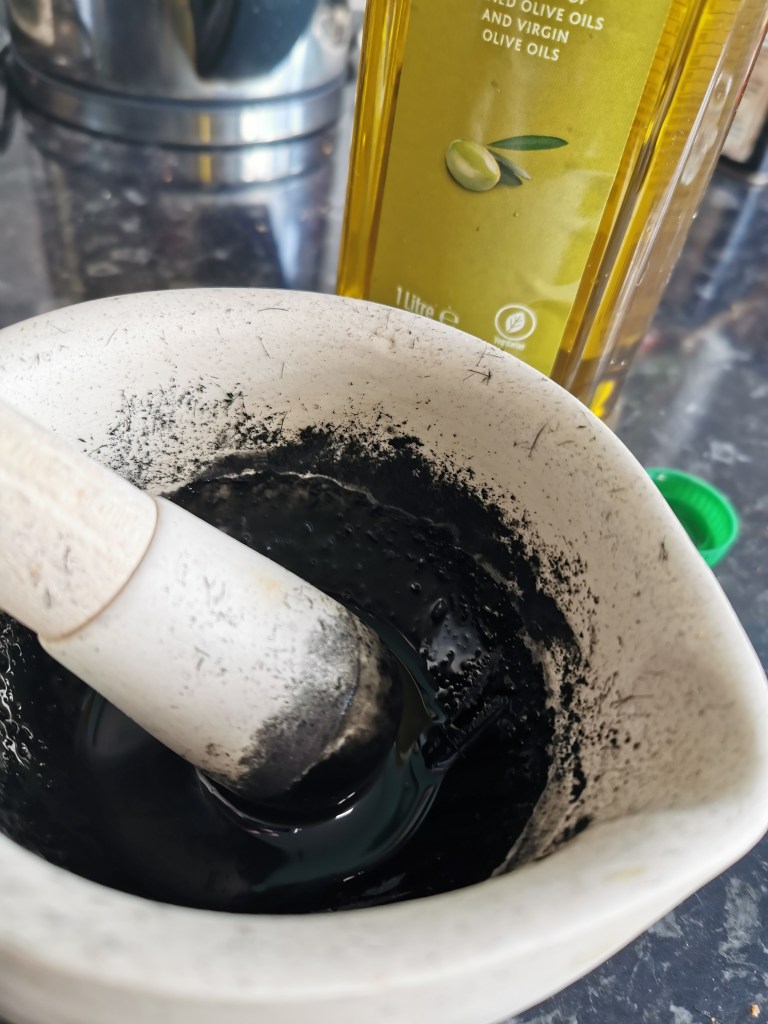
  4. Once they are pretty comprehensively burnt, grind them with a mortar and pestle.
  5. Add olive oil and stir it really well so the ash is mixed in completely.
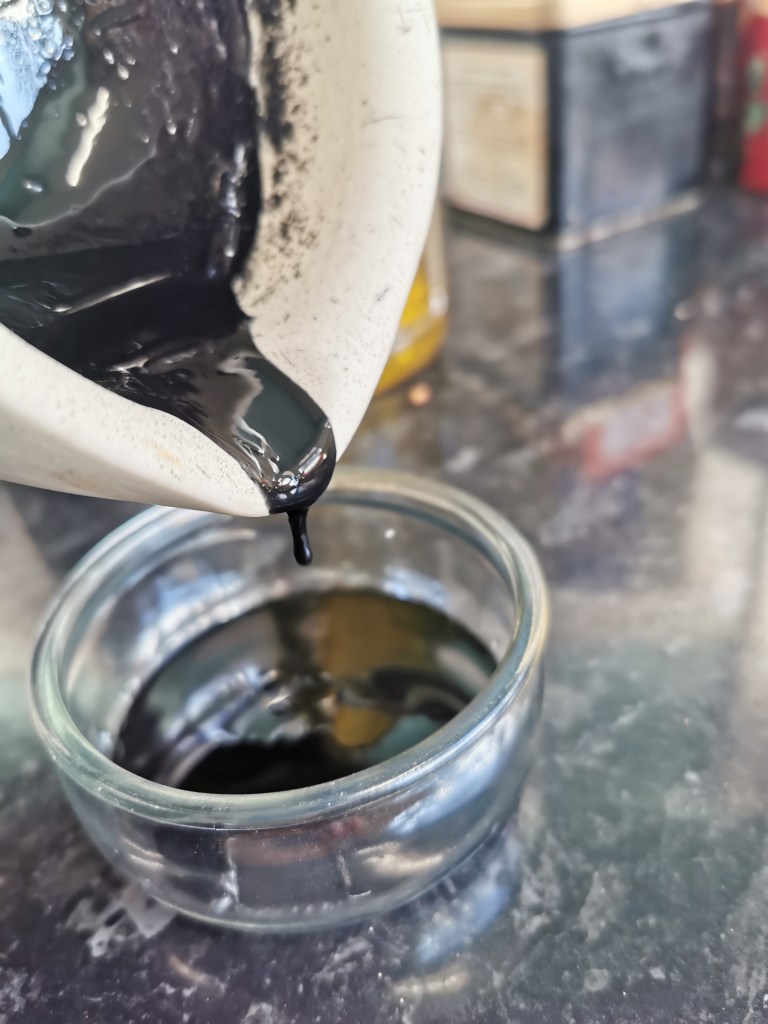
  6. Pour it into a handy glass jar from the recycling.
Here’s a video made during Step 3