Sermon for Sunday 21st June 2026 Matthew 10: 24-39
Early on Monday morning this week, a Russian missile struck Kiev’s Dormition Cathedral in and ancient monastery complex which has stood at the heart of Ukrainian Orthodox Christian life for almost a thousand years. By dawn, its golden roof was on fire, but later that morning, a young man arrived there, a theology student who had once studied at the monastery. 24-year-old Mykhailo Oharkov came simply to pray. In that striking image: a cathedral burning contrasting with a student kneeling, we see the contrast between two different forms of power.
Last week we saw how Jesus empowered his disciples to share and spread his ministry of healing and proclamation, sending them out not as conquerors but as servants, and I reflected on how utterly unlike the Roman model of power this was. Matthew’s Gospel continues where we left off last week and turns to what that different way of being in the world will cost the disciples.
Jesus begins with a word of solidarity and warning: whatever fate awaits him, his disciples should expect to share it. Jesus isn’t softening the persecution which lies ahead, but then he says, three times, in different ways: don’t be afraid.
The first reason he offers is the power of the Gospel to reveal truth. Whatever is covered will be uncovered; whatever is spoken in the dark will come to light. God’s truth cannot be permanently suppressed by human power. Proclaiming the Gospel in word and deed must happen in plain sight, not because it is safe to do so, but because the truth of God shines in the darkness, and the darkness cannot overcome it, no matter what the powerful might like us to think.
Then Jesus makes a powerful claim about the nature of power itself. He acknowledges the reality of human violence: yes, there are those who can kill the body, the threat of death is real, and Jesus is not dismissing it. But he puts it within a broader reality. Those who can kill the body cannot touch what God cherishes. God, who has power over the whole person, not just our bodies, exercises power in a way which is entirely unlike the powers of this world: a way that is rooted in our being God’s treasured possessions, precious in his sight. The metaphors Jesus offers are very ordinary: sparrows are the cheapest thing you can buy in the market, yet not one of them falls to the ground without God’s knowledge; and even the very hairs of your head are numbered. This isn’t Rome’s logic: they don’t count sparrows; they count legions. Rome doesn’t number the hairs on a head; Rome counts the heads of its citizens and slaves. The sovereignty of God, as Jesus reveals it, is a sovereignty of attentive love, a power exercised in care, not coercion. This understanding goes way beyond Jesus being merely reassuring to his disciples; it’s about beginning to see the world differently, to recognise that the apparent invincibility of human power is a complete façade compared to God’s power.
This is what makes verse 34 not a contradiction but a clarification: Jesus has not come to bring peace, he says, but a sword, but this is not the sword of conquest. The word Matthew uses is a sword used for hand to hand combat – a word which was commonly used metaphorically to mean “struggle”. In Luke’s Gospel, (12:51) this is more explicit – “Do you think I have come to bring peace on earth? No, I tell you, but rather division.” Jesus comes not to bring peace, but struggle – a struggle that is a matter of life and death. This sword, this struggle, comes from the inevitable friction and conflict which is generated when the logic of love encounters the logic of domination. When Jesus heals the sick, restores the outcast, raises the dead, he’s not just performing acts of compassion; he is dismantling the foundations on which human power depends. Rome’s power rested in part on the fear of shame, exclusion and death; take those away, see them as something not to be feared in the final analysis, and the façade begins to crack. When the worldview which underpins power is challenged, power responds with violence, and it calls that violence order, or security, or anti-terrorism, or the national interest. When we continue to live Christ’s story, when we proclaim Jesus in the world, it is not peace which comes our way, but a struggle – human power rising to meet the challenge of God’s love. Division, even between family members, will be the result.
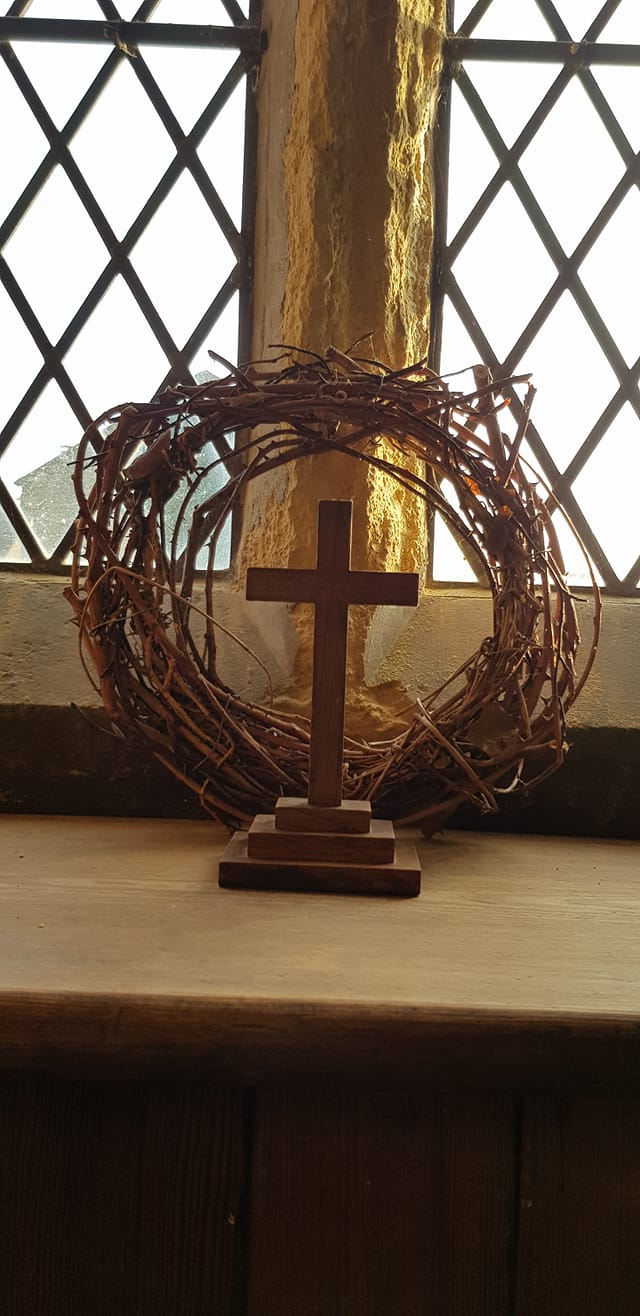
And so we come to the heart of things, and to the hardest of Jesus’s sayings in this passage. Those who want to follow Jesus are called to take up the cross. We are so accustomed to this image as a metaphor for personal sacrifice that we can easily miss what it meant in first-century Palestine. Crucifixion was the most shameful and dehumanising Roman punishment reserved for those who refused to submit to its authority. It was the fate of the marginal, the disposable, those whom empire had decided did not count. To take up the cross is to identify with precisely those people, to align ourselves with those whom the world’s power discards, and to refuse the safety of compliance with the structures that promise security in exchange for our silence. It is to live as though the sovereignty of love is more real and more durable than the sovereignty of force.
And then Jesus gives us the paradox that only makes sense in light of everything that has come before: those who lose their lives for Jesus will find them, and those who secure their lives within the world’s own terms will lose them. If power is ultimately the love of the God who raises the dead, then to lose ourselves isn’t loss at all. It is the discovery of a life that death itself cannot end, because it belongs not to the world’s economy of power, but to the risen life of Jesus Christ, who was himself the one whom Rome crucified and God vindicated. At Easter, we learn which power truly prevails.
What does this mean for those of us who follow Jesus now, in a world still very largely organised around the same understanding of power as Rome? It means, at the very least, that we are called to inhabit a different account of reality, to see through the façade of invincibility that human power projects, to resist the fear which that façade is designed to generate, and to bear witness to the sovereignty of love in how we live. This is not a comfortable calling, and the passage is honest enough not to pretend otherwise; the way of the cross generates conflict, costs allegiances, and will sometimes bring us into collision with the structures of the world we live in. But the Holy Spirit who hovered over the waters at creation, who raised Jesus from the dead, who was poured out at Pentecost upon all who believe, is the Spirit of the God who counts sparrows and numbers hairs; and we bear witness, day by day, to a power that no missile, no drone, no gilded roof ablaze in the early morning darkness, can finally diminish. And in that witness, like a young man arriving at a smouldering cathedral to kneel in prayer before a power mightier than the destructive forces of sinful human power, we find not the end of life but its fullness. We embrace the power of the cross, an eternal power: the power of the love of God.


Leave a Reply