Ponderings on Intergenerational Ministry
There is a moment, familiar to anyone who has worked in a team across a significant age gap, when you realise that the misunderstanding you’re experiencing isn’t really about the specific thing in front of you but something deeper: a different set of assumptions about how (and how much) work is to be done, how communication happens, and what a healthy professional relationship looks like. I’ve been pondering this for a while now, and these ponderings are my attempt to think it through honestly, without pretending I’ve arrived at tidy conclusions.

To explain. I’m a GenX vicar who came of age in a culture that valued self-sufficiency, expected you to muddle through, and treated stoic pragmatism as a virtue. You picked up the (landline) phone to make arrangements in advance and often had to improvise sensibly when arrangements went awry. You popped round to friends and relatives for an ad hoc chat so find that kind of communication useful at work. You thought on your feet and embraced (and learned from) your imperfect responses to the unexpected. You had permission to fail because that is how you learned. Basically, you just got on with it without any sense of the unexpected or failure being necessarily traumatic or even remarkable. I absorbed those habits so thoroughly that they stopped feeling like habits and started feeling like common sense, which is, of course, precisely when habits become most difficult to examine.
I have ministered alongside parishioners and colleagues who are GenZ. They are, by almost every measure, thoughtful, committed, loving and gifted. They are also shaped by a massively different set of cultural, parenting, and technological experiences, and those experiences produce different expectations about communication, boundaries, and the rhythms of working life. A brief phone call, email, or WhatsApp message that feels to me like the obvious, efficient solution to a problem can feel to a younger colleague like an unexpected intrusion, one that demands an immediate, unscripted response with no time to compose thoughts or gather information. What I intend as helpful, purposeful directness, they may experience as intolerable and unnecessary pressure. What they intend as appropriate boundary-setting, I may experience as avoidance or laziness. We can easily misjudge one another’s intentions and motives.
I want to be careful here. There’s a huge risk of generalisation in all of this: GenX and GenZ are not monoliths. Every individual carries their own history: variations in upbringing, family background, and cultural experiences; their own neurology – basically, each of us has their own particular formation. So, to write about generational archetypes is to deal in tendencies, prevailing cultures and patterns, not certainties, and any given person will sit closer to, or further from, the epicentre of their generation’s “typical” experience. I am aware, as I type, that I’m dealing with categories that real people seldom neatly inhabit, and I want to hold that awareness throughout.
With that caveat firmly in place, I think there are patterns real enough to be worth reflecting on, particularly in the context of Christian ministry, where the stakes of getting this wrong are not merely professional but pastoral and missional.
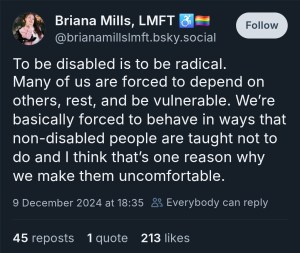
The question of reasonable adjustment is one I approach with some caution, but I think it needs to be named. There is an emerging and important conversation about neurodiversity, anxiety, and mental health in the workplace, and it has rightly expanded our understanding of inclusion – something I take very seriously. Some people, across all generations (but with particular visibility among GenZ) experience genuine difficulty with certain modes of communication and working patterns because of diagnosed disabling conditions. The appropriate response to that is awareness and education on the part of the rest of the team, especially leaders, and a commitment to making reasonable accommodations with a focus on welcome and inclusion, not a demand to simply “toughen up”.
And yet. To love a colleague well is not always to remove every difficulty from their path. There is a distinction worth drawing between accommodation as an act of genuine inclusion (something which is theologically grounded and non-negotiable) and accommodation as a substitute for the kind of formation that prepares someone for the real and often uncomfortable demands of ministry. An ordinand who finds difficult conversations deeply uncomfortable is not, by virtue of that discomfort, excused from having them. A youth leader who thrives on strict timetabling and a compartmentalised approach to the rhythm of the working day will often have to deal with teenagers rocking up with unexpected demands and be called on to react to situations which do not fit with their schedule. Part of what formation means is learning (with support and alongside others) to do the things that ministry requires. The question is not whether to make that demand, but how to accompany someone through it with patience and grace, and equip them to navigate these demands, manage the emotional and mental loading which these situations add, and ensure their workplace provides sufficient resources, support and Sabbath-space to balance something which is more of a burden to them than it might be for someone who is neurotypical.
This is where, I think, the intergenerational dynamic can become demanding for those of us in senior leadership. It’s easy for us to project a spirit of impatience when our intention is simply to demand high standards. And it’s equally easy to assume that what is being asked of us is indulgence rather than a plea for pastoral care from a place of being burdened beyond what we can comprehend. The harder path is to hold both in tension: to take seriously the genuine needs and differences of younger colleagues, while also being honest that some of what ministry requires cannot be negotiated away. That path requires relationship, time, and a willingness to be changed by what we encounter, not merely to manage it.
I’ve found the Acts of the Apostles offers a handy framework to help me navigate this. The great drama of Acts isn’t just the spread of the Gospel across the known world; the equally important drama to my mind is the astonishing and repeatedly-contested discovery that God’s Kingdom crosses boundaries that initially seem, to those on both sides, insurmountable. The early chapters shudder with the aftershocks of Pentecost, when the Holy Spirit descended not on a homogeneous group, but on a gathering of people from across the known world, each hearing the Good News in their own language. The miracle was not uniformity, but comprehension across difference, and it was entirely the work of the Spirit, not the achievement of any individual or faction.
Later chapters are correspondingly honest about how difficult the outworking of that miracle of diversity proved to be. The Jerusalem Council of Acts 15 is a record of huge disagreement, genuine theological tension, and the slow, costly work of finding a way forward together. Jewish and Gentile Christians didn’t simply discover overnight that they shared a common life which was easily slipped into by all concerned. They had to construct it, argument by argument, relationship by relationship, with plenty of false starts and painful moments along the way. The root of this was their cultural, linguistic, and formational differences and learning to discern how the same Spirit was at work in each of them. Luke doesn’t airbrush this. He lets us see the mess, the hurt, and the conflict because how this is overcome – the work of the Spirit – is key to the story.
I find that oddly reassuring when I think about intergenerational challenges in my own context. We’re not the first community of faith to discover that people shaped by different cultures, different assumptions, and different habits of life do not automatically understand one another. Were not the first to find that good intentions alone are not sufficient, and we’re not the first to discover that the way through is not to flatten differences but to learn, painstakingly and together, to speak each other’s languagend to seek the unity of the Holy Spirit as we pursue our common life in Christ.
Jesus, in the farewell discourse in John’s Gospel, gives his disciples a new commandment: to love one another as he has loved them. It is, he says, by this that the world will know they are his disciples. It’s a deceptively simple statement that becomes more demanding the longer you sit with it. The love Jesus describes is not a warm feeling or a general benevolence: it’s the love that lays down its life, that serves rather than demands, that remains present in difficulty rather than withdrawing to safety. It is, in short, a love that costs, a love which built the Spirit-led unity evidenced in the Acts of the Apostles, and which continues to build up the Body of Christ today.
To love a GenZ colleague as a GenX leader means being willing to examine my own assumptions about what good work looks like, and to discover that some of those assumptions are cultural habits rather than eternal truths. It means being curious about their experience rather than merely managing it. It may mean changing the way I communicate, not as a concession, but as an act of genuine regard for another person. It means understanding what burdens them and what I can do to minimise those burdens, or create recovery space for them. And it means being honest with them, in love, about what ministry requires, and accompanying them towards it rather than simply demanding it of them.
To love a GenX leader as a GenZ colleague means something different but equally demanding: a willingness to extend trust to give the benefit of the doubt when a phone call, email or WhatsApp message feels like an intrusion; to consider that the habits of GenX colleagues were formed in a context that had its own logic. It means recognising that the discomfort, pace, and nature of certain modes of communication (and pace and expectations of work) isn’t always a reason to avoid them, and that formation often feels, at the time, like pressure. It means embracing the ad hoc, the messy, and the imperfect as normal, acceptable and even as occasions of grace.
Neither of these is easy, and I’m conscious that I am describing something I am still learning rather than something I have mastered.
I began by saying that these ponderings would not arrive at tidy conclusions, and I want to honour that as I close. The categories I have been working with, GenX and GenZ; the stoic and the boundary-setter; the seat-of-your-pants improviser and the timetabled self-regulator, are approximations and inaccurate at the individual level. They point towards something real, but they don’t map cleanly onto anyone, and to treat them as though they do would be to repeat, at the level of these musings, exactly the failure of imagination I’m trying to avoid.
What I am more confident about is that the way through isn’t theoretical. It won’t be found in a better way of categorising generational differences, nor in a more sophisticated framework for workplace accommodations. It will be found, if it is to be found at all, in the slow and sometimes difficult work of actual human relationships, in the practice of listening before speaking, in the willingness to be surprised by another person’s experience, and in the kind of loving fellowship that John’s Gospel sets before us as the mark of the community of Jesus. I this is accompanied with a commitment to praying together.
The Holy Spirit, at Pentecost, didn’t wait for everyone to agree before creating comprehension across difference. That is, I think, our best hope: not that we will resolve these tensions by our own wisdom, but that we will remain in the conversation long enough, prayerfully enough, and with enough genuine love for one another, for something more than our own understanding to emerge.
Nicholas Morgan, 15th May 2026


Leave a comment