Oct 6, 2026 · @Nick
There is a big difference between the people we are in fellowship with and people we’re simply “on good terms with”. We have plenty of ways of speaking about the amicable relationships we enjoy: there are people we can disagree with agreeably, and there are people with whom we find common cause; there are people we’re tolerant of, and people we are genuinely affirming of. All of that is good. But none of it is quite the same as fellowship. That is deeper than merely being on friendly terms.
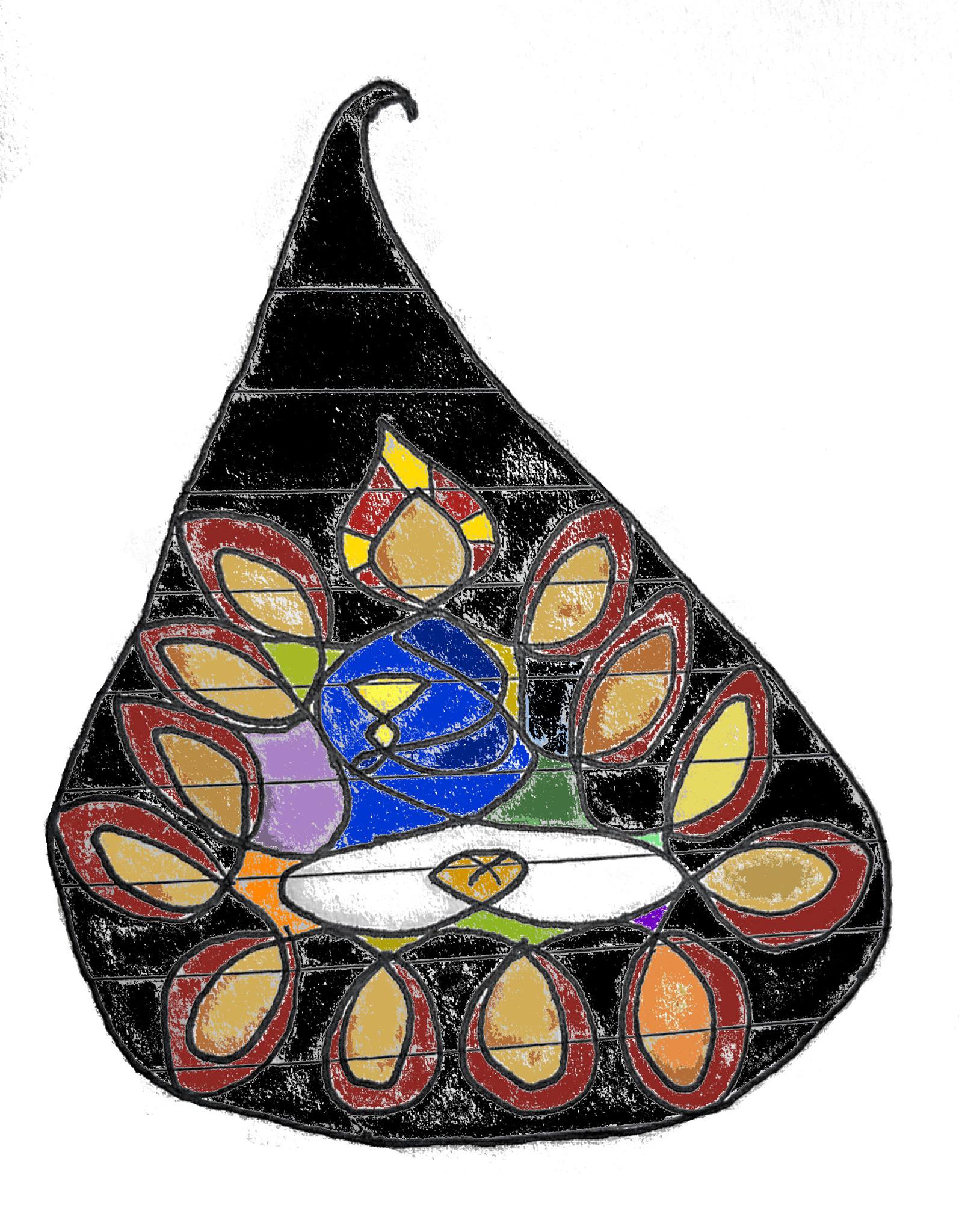
The Last Supper: a promise of fellowship
What I mean by fellowship
Fellowship belongs with that very Johannine language of abiding, dwelling and living with. In the Last Supper discourses of John’s Gospel, Jesus speaks of mutual indwelling. He abides in the Father and the Father abides in him. He abides in his disciples as they abide in him. He promises the Spirit of Truth, who will abide with them for ever (John 14 & 15) and he prays that they may be one, as he and the Father are one (John 17).
That is the depth of fellowship the New Testament means by koinonia, the deeply shared life of the first believers, devoted to the apostles’ teaching, the breaking of bread and the prayers (Acts 2:42). It’s a company of people who are one in heart and soul (Acts 4:32), a fellowship that is united with the Father and the Son (1 John 1:3). So fellowship is more than warmth and good relations: it’s being on the same page at the very deepest level, with a sense that something is shared in the most fundamental, existential way because the same Spirit dwells in us.
Neighbours: different, not lesser
So having described our literal nearest and dearest in Christ as “fellowship”, the contrast then is the others we rub along with well. Calling them people we are “on good terms with” is too flimsy a phrase, really. Thankfully, Jesus gives us a better and more succinct label: neighbour.
When a lawyer asks Jesus who his neighbour is, Jesus answers with a tale where the “neighbour” is a Samaritan (Luke 10:25–37). The Samaritan doesn’t share the lawyer’s temple, his reading of Scripture or his politics. He is not in fellowship with him. Yet he’s the one who shows mercy, and Jesus holds him up as the exemplar of someone who fulfils the demand of the Law to love his neighbour. So being a neighbour is not a lesser thing than fellowship – it is a good and holy thing to be if we look at it through the lens of the story of the Good Samaritan, remembering that this is to illustrate the summary of the Law: what it means to love God and neighbour. But it is different to being in fellowship. Neighbour-love asks for justice, mercy, honesty and costly care, but it doesn’t ask us to be of one heart and mind. It doesn’t demand the same indwelling fellowship which Jesus describes at the Last Supper.
This sense of being neighbours is the ground of our interfaith relationships. We recognise what is good where we see it. We recognise a righteousness of holy living when we see it in people of other faiths and none – those who love their neighbours in a way which is consistent with fulfilling the demands of God’s Law. So we find common cause with these neighbours in pursuing God’s agenda of justice, peace and love, even where we describe it differently, and root it in different scriptures, understandings, philosophies and world-views. None of that common cause and friendship depends on pretending we believe the same things.
People and positions
Here is where it gets hard, and somewhat risky, if you’re called upon to make public responses on political and “hot potato” issues in which our neighbours, whom we love, have a deep investment or sense of hurt which carries a very particular way of looking at situations which, if deviated from, or nuanced by us, cannot be tolerated. Differences arise where we find that we cannot give our full backing to a group, cause, or position, because something sits uneasily with our own faith, or our faith calls us to see things differently, or express things differently. Anything short of undiluted, undeviating mirroring of the given position is intolerable and becomes open to condemnation. And it is hard to leave room for nuance when emotions run high and the issue is so deeply divisive.
One distinction helps me. Fellowship and neighbourliness are relationships with people. Backing and endorsements are about positions: movements, ideologies, governments and their policies.
The two are easily blurred when one is a public figure (such as a vicar, but we are not unique in being placed in this situation). If I decline to fully endorse a position, someone may hear that I have withdrawn my love from those people who hold it. When I stand alongside people, someone may assume I have signed up to absolutely everything done in their name. Keeping the two apart does not make the tension go away. But it does give us a way to speak that is honest about both.
The hard case: Israel, Gaza and 7 October
Today is 7th October, the 3rd anniversary of appalling terror attacks against Jewish people. In this context, the conflict between Israel and Palestinians is the hardest of hard cases to being nuance into. The situation brings Zionism and Palestinian nationalism, and the freedoms each seeks, into sharp collision, and as events and ongoing situations are focused upon, this brings atrocities committed against innocent humans to the fore. Atrocities which must be called out.
Is it possible for a Christian to affirm our Jewish and Muslim neighbours with an equal commitment to justice and righteousness for both? Can we do it without seeming to equate one horror with another? Can we do it without sliding into moral relativism, picking and choosing what we condemn?
I believe it is possible, though it is extraordinarily difficult. It means holding several things together at once:
- condemning absolutely and without qualification the attacks of 7th October, in which Jewish people were murdered, raped and taken hostage simply for being Jewish
- upholding the cause of Palestinian freedom and dignity
- saying plainly that the devastation of Gaza, and the scale of civilian death and suffering there, is a grave abuse of human rights
- affirming the right of the Jewish state to exist, and to exist in peace without fear of being wiped out
- remaining free to question Zionism as an ideology, and to condemn the State of Israel when it commits horrors in its name
This is where the distinction between people and positions is crucial. None of these statements is a verdict on Jewish people or on Palestinian people. Each is a judgement on actions, applied by the same standard to whoever commits them. That is not equivocation. It’s an attempt at consistency.
I say attempt, because as soon as we head into this territory some will inevitably condemn us. They will say we are equivocating, or equating one horror with another, or letting one side off the hook, or not taking into account the cause of justice which they see lying behind an action we have condemned. They will say we are not taking terror, or genocide, seriously enough, because we do not stand in complete fellowship with one side’s position or the other, or because we mourn the dead of their enemy. But we still must seek to be good and loving neighbours, even when fellowship eludes us.
The vicar in the crossfire
I have come to no neat conclusion, and I certainly cannot claim wisdom on my own part when it comes to understanding the situation in Israel, Palestine and the wider region, so I assure you that these thoughts have not been intended to offend anyone. I’m aware that listening rather than pronouncing is more appropriate from a son of an Empire which left a complex legacy, deeply marred by injustices around the globe which resonate today (even if my own forebears were of a social class ignorant of all of that and in any case powerless to affect it).
Public figures, including clergy are often are asked to make pronouncements, and most of us try to do this with nuance, love and justice, while the media and lobby groups around us howl for one side or the other, seek a simple narrative, and ask us to give the impression of undiluted fellowship with one position or another. In doing so the media and some political groups end up baying for blood, which is very much not a Jesusy thing to do, and is therefore not a howling we can join in with. And those who disagree with us when we seek to call out evil, or to proclaim neighbourly love, may say that in doing so we are on the side of the devil, not the angels.
There is at least a crumb of comfort in that last charge: John’s Gospel got there first. Jesus himself was told, more than once, that he had a demon (John 8:48; 10:20), largely because he wouldn’t agree with people’s positions and was saying things they did not want to hear. Being misread from both sides isn’t proof that we’re right – that’s far too simplistic. But it’s not proof that we’re wrong, either.
Perhaps that is the calling: to be faithful neighbours to everyone, but to keep the word fellowship for what it truly means to us as Christians, and to judge actions by one measure – measuring them against the character of Christ, and the righteousness of God – whoever commits them. And then to get on with the holy business of abiding in Christ, who abides in us, when the howling and the condemnation starts to come our way.


Leave a comment