
How do you keep your long-term plans refreshed? I ask this as someone keen to learn from others in leadership positions in different fields to my own (i.e. church ministry).
A key aspect of this for me is active listening to the people who are already involved and invested, or whom I have “talent spotted” as people with potential to be nurtured as key people. But when many of these folk are volunteers with busy lives and differing capacities of available time and energy, it can be hard to get a clear picture quickly without mainly engaging with the most available (or loudest) voices. The advent of AI has made this challenge harder as one can find oneself reading a massive screed from a stakeholder in a project which at first glance looks well-developed but has not had the hard graft of a human thinking things through before you are presented with it, so it soon proves inadequate as a starting point for taking things forward without you as leader having to unpick it all and do the actual mental work! Finding strategies to engage with less available but equally valuable voices is important, as is how to engage with the over-thinkers in a way which is neither exhausting to you, nor comes across as dismissive and evasive to them!
Getting external help is one tool. In my world, this means Diocesan advisors who have proven invaluable through convening workshops, providing resources, or making presentations to our deanery synod (the deanery being our more local network across a smaller region than a diocese). Another way has been by engaging with materials and processes from bodies such as CPAS or LiCC, or having books to guide us (e.g. Margaret Pritchard Houston’s “Beyond the Children’s Corner” when strategically reviewing our ministry with children).

Whilst these are great in providing impetus and focus, the real work comes through engagement and follow-up. I take the view that, with limited personal resources as a leader, it is more often a case of meeting energy with energy. By which I mean, when I see energy and engagement from someone, I come alongside, nurture it, encourage it and provide an overseeing eye, or co-lead. Yes, sometimes the initiating and major energy needs to be my own, especially when one is nurturing the growth in faith of someone who might not have put themselves forward as an initiator of a project, but in a setup as complex as a multi-church group spanning different communities, meeting a variety of social and cultural needs, and requiring engagement at several layers all at once, a leader who tries to do all the heavy lifting alone (even with a token bit of delegation) will soon do the spiritual equivalent of putting their back out and be ineffective. It is also a poor model of Church. Developing everyone’s vocation as a follower of Jesus is a key part of the core role of a vicar or church leader.
Many of my volunteers have a wealth of experience from their world of work, or other volunteering activities, and giving space for others to lead where their competence exceeds my own is part of the skill. Triaging shared leadership is a skill in itself, requiring by turns humility, discernment and occasionally having the strength and will to stop someone getting their own way simply because of their strength of character and determination to have their own way when this is not necessarily the direction the whole community needs at that particular time. And navigating that can be a hard call!
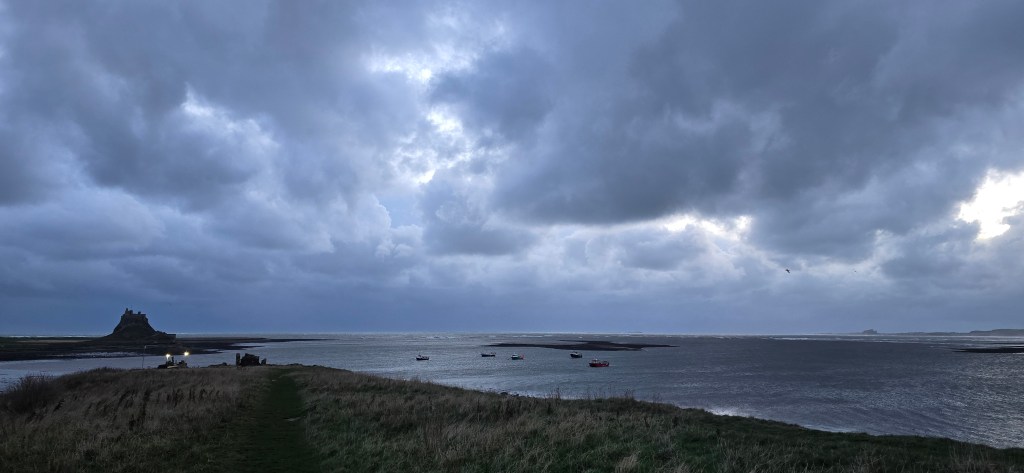
In terms of keeping my own leadership fresh, my annual retreat to Holy Island is key. That period of stepping away and active reflection in a place of quiet contemplation with a companion to reflect with is absolutely invaluable. This means I return with renewed perspective, ready for conversations, for coming up with a process for revision, planning and longer term consultations with a fresh sense of personal vision as a leader.
There is so much more to say and unpack, but I wonder…
How do you navigate these aspects of strategic leadership in your industry or ministry?
 Vicar of Villages